Downriver Child Pedestrian Accident Lawyer | MI No-Fault
Protecting Our Kids: How Michigan No-Fault Applies to Child Pedestrian and Bicycle Accidents
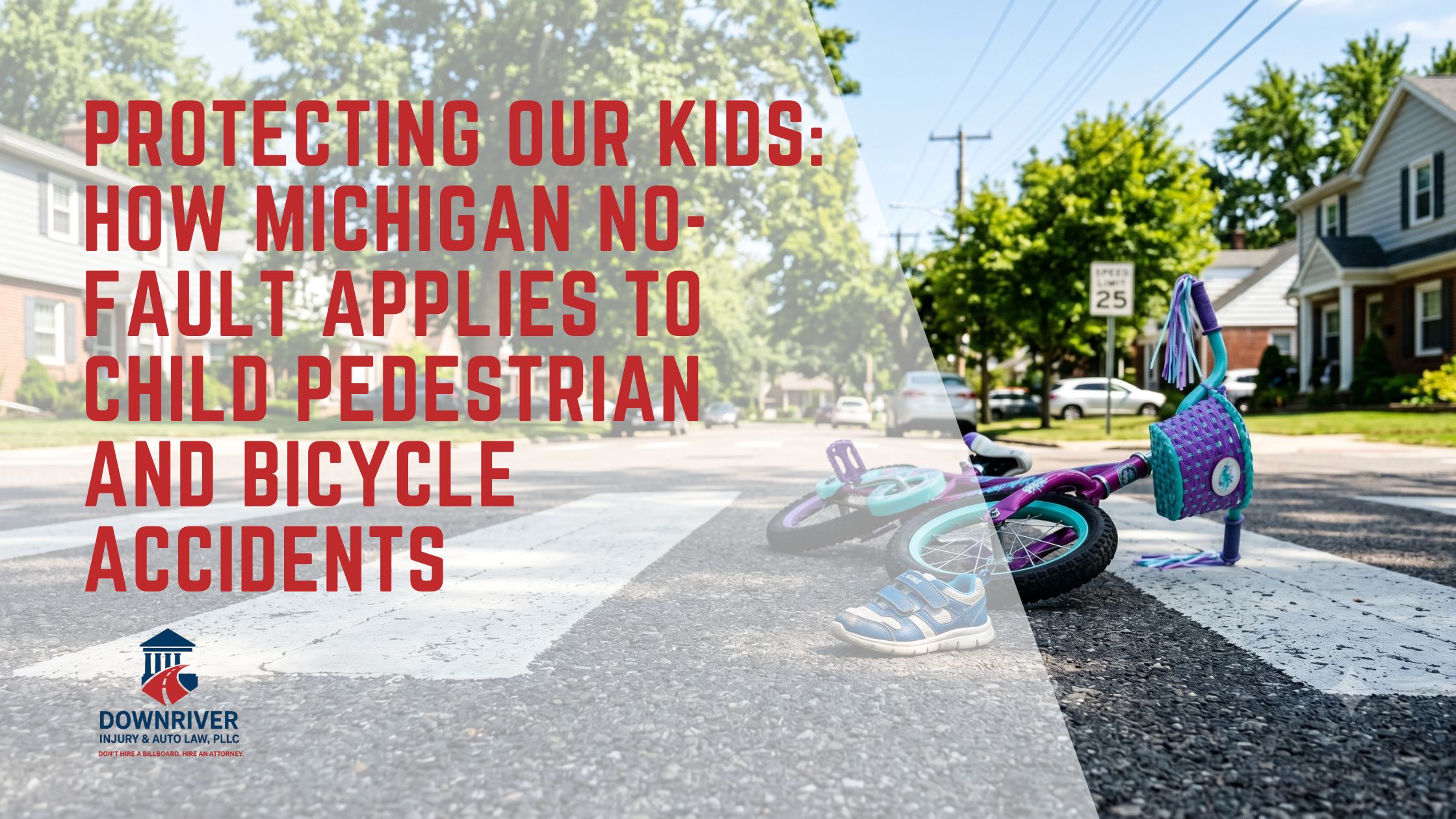
By mid-June, the school zones in Downriver are empty, and our neighborhoods transform. Kids are out riding bikes in Trenton, playing street hockey in Southgate cul-de-sacs, and walking to the local pools and ice cream shops across Taylor.
It is the best time of the year for families, but for a personal injury attorney, it is also the most anxious.
Recent data from the Michigan State Police reveals a terrifying trend: pedestrian-involved crashes have been surging, with a recent 11% increase across the state. When the victim is a child on a bicycle or on foot, the physical and emotional toll is unimaginable.
If the unthinkable happens and your child is struck by a vehicle this summer, the last thing you want to worry about is battling an insurance company. However, because of Michigan’s complex No-Fault laws, securing medical coverage for a child who doesn't even have a driver’s license is incredibly confusing. Here is a deep dive into how Michigan law protects our most vulnerable residents—and where the system falls short.
The Order of Priority: Who Pays the Medical Bills?
When a child is hit by a car while walking or riding a bike, parents instinctively assume the at-fault driver’s insurance will automatically step in and pay the hospital bills.
Under Michigan’s No-Fault Act, that is incorrect. Michigan relies on a strict "Order of Priority" to determine who pays Personal Injury Protection (PIP) benefits (medical bills, attendant care, and replacement services). If a child is struck by a motor vehicle, the law dictates you must seek coverage in this order:
1. The Parents' Auto Policy (Resident Relative Rule)
Because a child does not have their own auto insurance, Michigan law looks to the "resident relatives" in the child's household. If you (the parent or guardian) have a Michigan No-Fault auto insurance policy, your auto insurance is legally required to pay your child’s medical bills—even if your car was parked in the garage at the time of the crash.
Note: Your child is bound by the PIP medical coverage limit you selected on your policy. If you selected $250,000 in PIP coverage, your child's auto-related medical benefits will cap out at $250,000.
2. The Michigan Assigned Claims Plan (MACP)
What happens if your family does not own a car or have auto insurance? The child is not left without help, but the safety net has severe limits. You must apply for benefits through the state's Assigned Claims Plan. The state will assign an insurance company to handle the medical bills, but under the 2019 No-Fault reforms, these benefits are strictly capped at $250,000. For a child who suffers a traumatic brain injury or spinal cord damage requiring lifelong care, a $250,000 cap is exhausted almost immediately.
Holding the Driver Accountable (The Third-Party Claim)
PIP benefits only pay for economic losses (medical bills). They do not compensate your child for the trauma, the physical pain, the scarring, or the loss of their childhood experiences.
To secure compensation for pain and suffering, we must file a lawsuit against the driver who hit your child.
However, insurance defense lawyers are aggressive, and they frequently try to blame the child. They will argue:
"The child darted out from between parked cars."
"They weren't using the crosswalk."
"They rode their bike into the street without looking."
Michigan follows the rule of "comparative negligence." If a jury believes the victim was more than 50% at fault, they cannot recover pain and suffering damages.
Why the "Darting Out" Defense Fails Against Children
This is where having an experienced attorney is critical. At Downriver Injury & Auto Law, we aggressively counter the "darting out" defense by relying on specific Michigan case law regarding minors.
The law recognizes that a 7-year-old does not have the same cognitive awareness or judgment as a 35-year-old adult. Drivers have a heightened legal duty of care when driving in residential neighborhoods or near parks because the presence of children is foreseeable.
We don't just accept the driver's excuse. We dig deeper:
We subpoena the driver's cell phone records to prove they were texting and wouldn't have seen the child regardless.
We pull the vehicle's "black box" data to prove they were speeding through the subdivision.
We secure neighborhood Ring doorbell footage to prove the driver rolled through a stop sign before the impact.
Protecting Your Child's Future Settlement
If we secure a large settlement for a minor child, the law requires us to protect that money. We work with the Wayne County Probate Court to establish a Conservatorship. This ensures the settlement funds are safely invested and legally locked away until the child turns 18, guaranteeing the money is there for their future college education or ongoing medical needs.
A Summer Safety Plea
We urge all Downriver drivers to slow down, put the phones away, and expect the unexpected in our neighborhoods this summer.
If your child is injured by a negligent driver, do not speak to the driver's insurance company. They will try to lock you into a recorded statement to use against your child later. Call Downriver Injury & Auto Law immediately for a free consultation. We treat your family like our own, and we know how to fight for their future.
Downriver Injury & Auto Law
Elite legal representation, right here in Downriver.
