Blaming the Weather: Why "Driving Too Fast for Conditions" Makes the Other Driver Liable
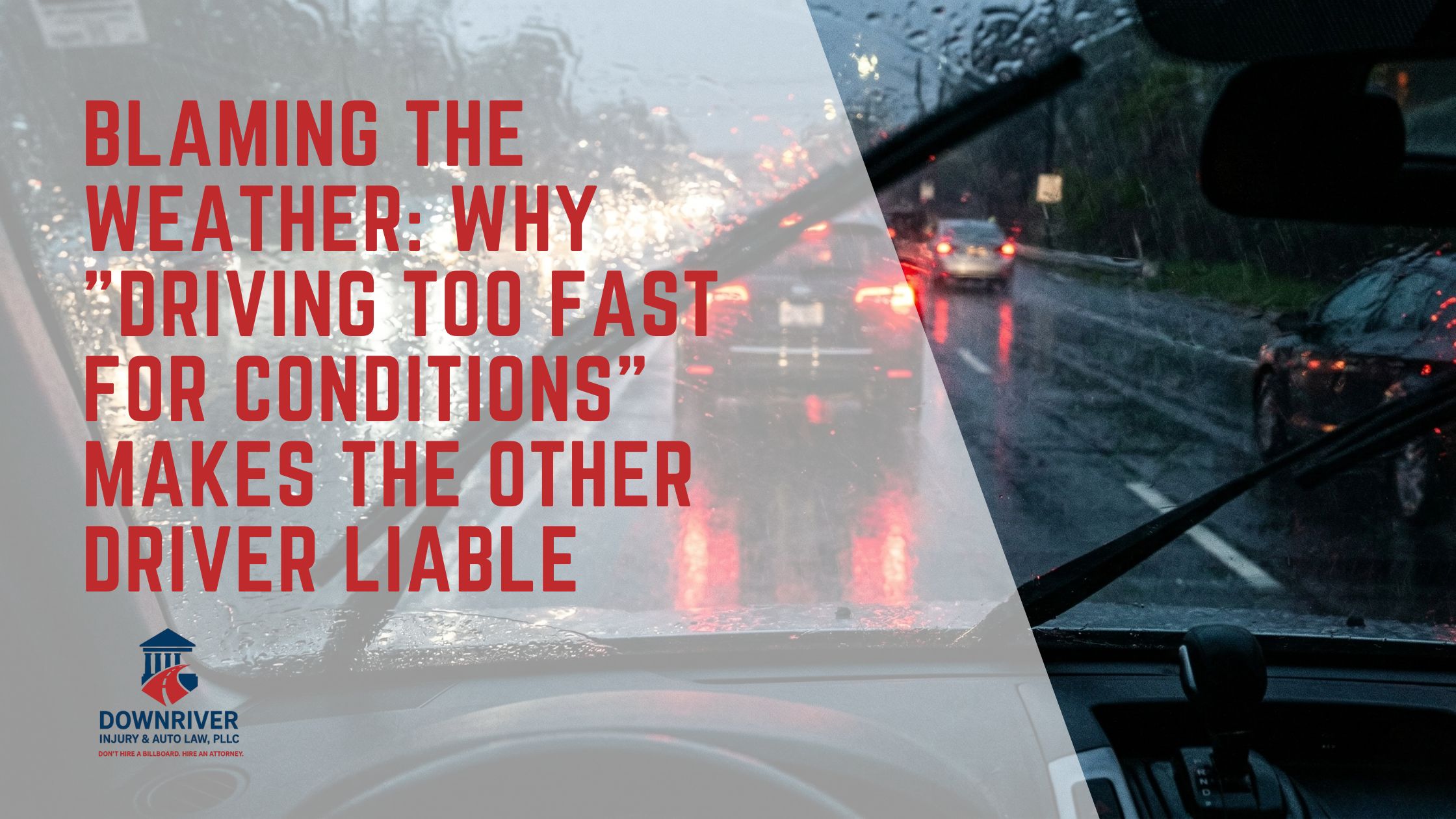
April in Michigan brings a welcome thaw, but it also brings torrential spring showers. If you've ever driven the Southfield Freeway or navigated the intersections of Eureka and Fort Street during a sudden downpour, you know how quickly the roads can turn into slick, dangerous hazards.
When a crash happens in the rain, the at-fault driver’s first instinct is almost always to point at the sky. They tell the police, “I hit the brakes, but the road was just too wet!” or “My car hydroplaned; there was nothing I could do!”
The insurance company will eagerly latch onto this excuse. They will try to frame the crash as an unavoidable "Act of God" or a pure accident caused by the weather, hoping to deny your claim for pain and suffering.
But in my 30 years of practicing personal injury law here in Downriver, I’ve heard every excuse in the book. The truth is: Weather does not cause car accidents. Drivers who fail to adjust to the weather cause car accidents. Here is how Michigan law views "weather-related" crashes, and how we hold negligent drivers accountable when they try to blame the rain.
The "Basic Speed Law" in Michigan
Many drivers mistakenly believe that as long as they are driving the posted speed limit, they are driving legally. This is fundamentally incorrect.
Under Michigan law (MCL 257.627), all drivers must obey the Basic Speed Law. This statute mandates that a person must drive at a "careful and prudent speed not greater than nor less than is reasonable and proper, having due regard to the traffic, surface, and width of the highway and of any other condition then existing."
In plain English: The posted speed limit of 45 MPH on Telegraph Road is only the legal limit under ideal, dry conditions.
If it is pouring rain, visibility is low, and water is pooling on the asphalt, a "careful and prudent speed" might be 30 MPH. If a driver hits you because they were going 45 MPH in a downpour, they were speeding under the law. They are liable.
The Hydroplaning Excuse: Act of God or Negligence?
"Hydroplaning" happens when a layer of water builds between the tires of the vehicle and the road surface, leading to a loss of traction that prevents the vehicle from responding to control inputs.
Insurance defense lawyers love to argue that hydroplaning is an unforeseeable emergency. They try to apply the "Sudden Emergency Doctrine" to get their client off the hook.
At Downriver Injury & Auto Law, we know how to dismantle this defense. Hydroplaning is rarely an unforeseeable act of nature. It is almost always the result of two specific types of negligence:
1. Driving Too Fast for the Water Depth Physics dictates that hydroplaning is heavily dependent on speed. If it's raining heavily and water is pooling, a driver has a legal duty to slow down to a speed where their tires can maintain contact with the road. If they fail to do so, they are negligent.
2. Improper Vehicle Maintenance (Bald Tires) Tread channels on tires are specifically designed to push water out of the way. If a driver chose to drive in a Michigan spring storm with bald, worn-out tires, they created the hazard. That is not an "accident"; that is a failure to maintain a safe vehicle.
How We Prove They Were "Driving Too Fast for Conditions"
When the other driver lies and the insurance company refuses to pay, we rely on hard evidence to reconstruct the crash.
Event Data Recorders (Black Box): We subpoena the electronic data from the at-fault driver's car. This tells us exactly how fast they were going in the seconds before impact and exactly when they applied the brakes.
Tire Tread Analysis: If we suspect the vehicle was poorly maintained, we demand an inspection of the at-fault driver's tires to measure the tread depth.
Historical Weather Data: We pull exact meteorological data for the specific Downriver zip code at the exact minute of the crash to prove that the severe conditions were obvious and required a reduction in speed.
Police Reports and Witness Statements: We look for notes from the responding officers about the road conditions and gather statements from other drivers who successfully safely navigated the exact same stretch of road without crashing.
Don't Let Them Wash Away Your Rights
If you are rear-ended or T-boned by a driver who couldn't stop on wet pavement, do not let them convince you it was just "bad luck." You are dealing with serious injuries, mounting medical bills under your No-Fault PIP policy, and a disrupted life. You deserve full compensation for your pain and suffering.
If you’ve been injured in a crash in Taylor, Lincoln Park, Trenton, or anywhere in Wayne County, contact Downriver Injury & Auto Law for a free consultation. We don't accept excuses, and we know how to win.
Downriver Injury & Auto Law Elite legal representation, right here in Downriver.
