Out of State Car Accident Lawyer | Michigan No-Fault Claims
Crashing Across State Lines: How Michigan No-Fault Applies to Out-of-State Summer Accidents
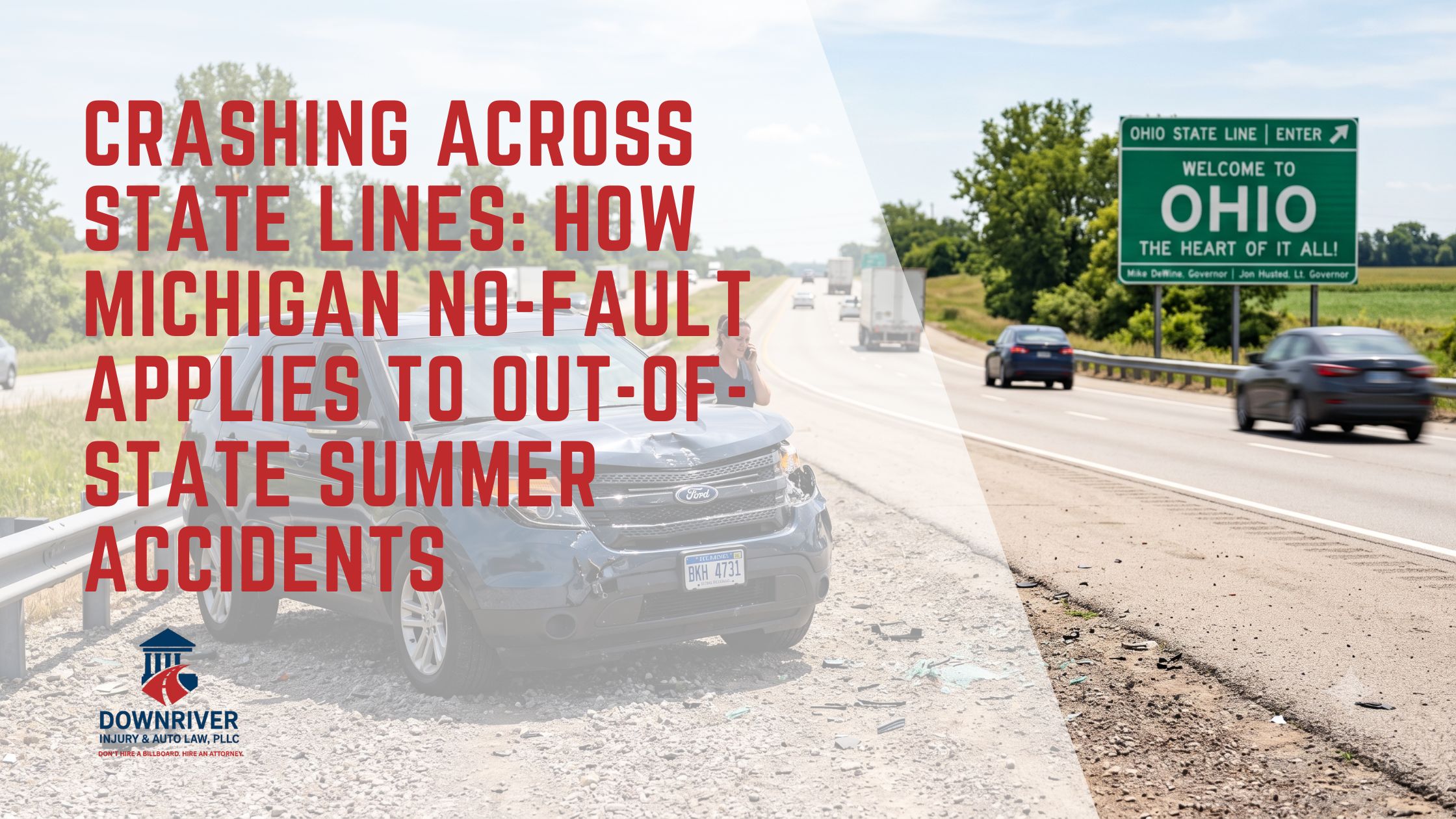
July is peak road trip season. Right now, thousands of Downriver families are packing up their SUVs and heading south down I-75 toward Florida, driving across the border to Cedar Point in Ohio, or taking cross-country treks out west.
But what happens when your summer vacation is derailed by a severe car accident outside of Michigan?
If you are a Michigan resident who gets rear-ended by a distracted driver in Ohio, Indiana, or any other state, the legal aftermath becomes a massive jurisdictional puzzle. You suddenly have to deal with out-of-state police, out-of-state insurance adjusters, and conflicting state laws.
As an injury attorney who has handled these complex cross-border cases for decades, I frequently field panicked calls from Wayne County residents stranded in another state. Here is a deep dive into how your Michigan No-Fault insurance works when you cross state lines, and how it impacts your right to compensation.
1. Your Medical Bills: PIP Travels With You
The most common fear people have after an out-of-state crash is how they will pay for an out-of-network emergency room visit.
Here is the good news: Your Michigan No-Fault PIP (Personal Injury Protection) benefits travel with you.
Under Michigan Law (MCL 500.3111), if you are a named insured on a Michigan No-Fault policy (or the spouse or resident relative of a named insured), your PIP coverage applies to accidental bodily injury suffered anywhere in the United States, its territories, or Canada.
This means that if you are hospitalized in Tennessee, you do not have to fight with the at-fault driver's insurance company to get your medical bills paid. You will open a PIP claim with your own Michigan auto insurer, and they will pay your medical expenses and wage loss up to the coverage limit you selected on your policy.
2. Pain and Suffering: A Different Set of Rules
While your medical bills are handled by Michigan law, your claim against the at-fault driver for pain, suffering, and the loss of your quality of life (a "Third-Party Claim") is generally governed by the laws of the state where the crash occurred.
In the legal world, this is called lex loci delicti (the law of the place where the tort was committed).
This can actually be a massive advantage for Michigan residents. Michigan has one of the strictest thresholds in the country to win a pain and suffering claim. To win here, you must prove you suffered a "Serious Impairment of Body Function." However, many other states are pure tort states and do not have this strict threshold. If you are injured in Ohio, you may be able to successfully sue for pain and suffering for an injury that a Michigan judge might have thrown out of court.
However, dealing with another state's statute of limitations and comparative fault rules requires a lawyer who understands how to navigate multi-jurisdictional litigation.
3. Property Damage: Goodbye Mini-Tort
If you get into a crash inside Michigan, the most you can usually sue the at-fault driver for vehicle damage is $3,000 under the "Mini-Tort" law.
If you get into a crash outside of Michigan, the Mini-Tort law does not apply. You are generally allowed to sue the at-fault driver's liability insurance for the full cost of your vehicle repairs, your towing fees, and your rental car costs, guided by the laws of the state where the crash happened.
4. What If the At-Fault Driver Has Terrible Insurance?
Different states have different minimum insurance requirements. For example, Florida only requires drivers to carry $10,000 in Property Damage Liability and PIP—they are not legally required to carry Bodily Injury Liability for pain and suffering at all.
If you are severely injured by an uninsured or underinsured driver in another state, you will have to rely on the Uninsured/Underinsured Motorist (UM/UIM) coverage on your own Michigan auto policy. This is optional coverage in Michigan, but it is the single most important coverage you can carry to protect your family from out-of-state drivers who carry state-minimum policies.
What to Do If You Crash Out of State
If you are involved in a collision outside of Michigan:
Call Local Law Enforcement: Always get an official police report from the local state police or sheriff's department.
Document Everything: Take photos of the vehicles, the license plates, and the exact location (using GPS coordinates on your phone).
Notify Your Michigan Insurer: Let them know you were in an out-of-state accident so you can begin the process of accessing your PIP medical benefits.
Do Not Sign Anything from the Other Driver's Insurance: Out-of-state adjusters will often try to offer you a tiny, fast settlement before you realize the true extent of your injuries.
Bring Your Case Back Home
You do not necessarily have to hire a lawyer in the state where you crashed. At Downriver Injury & Auto Law, we routinely represent Wayne County residents who are injured on out-of-state road trips. We coordinate with local counsel across the country when necessary, managing the entire legal process so you can focus on recovering back home in Michigan.
If your summer road trip ended in a severe accident, call us today for a free consultation. We know how to untangle the jurisdictional mess and maximize your compensation.
Downriver Injury & Auto Law Elite legal representation, right here in Downriver.
